

Cash Or Crash Live Non-Stop Customer Support or Crash Live carves its own space in the world of live game shows. Its appeal lies in a powerful blend of stage show and game rules that transforms every round into a test of your nerves. This is no a passive spin of a wheel of chance. In this experience, you are in control, actively deciding that directly control what you win. The idea hooks you with a rising multiplier, then dares you to grab it before a hidden “crash” clears the board. To fully benefit from the game, you must ignore the glitz and understand its actual mechanics. Let’s examine the rounds, the host’s role, the mathematics of risk, and what players can realistically do to steer through the excitement.
Finale: A Symphony of Chance and Decision
Cash or Crash Live is a captivating combination of pure chance and conscious decision. Its structure are built to create a narrative of escalating tension, driven by a transparent RNG and livened by a charismatic emcee. Measuring success as a enjoyable and likely rewarding round depends on several factors. It’s less concerned with predicting the uncertain and rather about comprehending how the game is constructed. It demands handling your bankroll with discipline and controlling the emotional impulses the game expertly provokes. By studying its stages, understanding its mathematical basis, and following a custom plan, you can change your outlook. You go from puzzled guesswork to knowledgeable participation in a uniquely tense live game show.
The role of the live host and RNG
The live host does more than talk. They determine the game’s emotional pace. While they cannot influence the result, they skillfully build suspense. They announce the climbing multiplier and provide live updates on what percentage of the crowd is cashing out at each level. That social cue can mess with your head. But remember, the host works separately from the game’s engine: the Random Number Generator (RNG). The crash point for each stage is set by a certified RNG the instant the stage begins. This ensures fairness and total unpredictability. The host has no clue when the crash will happen. Their job is entertainment. The RNG’s job is certifiable fairness. This combination merges transparent live action with provably random results.
Tactical Approaches and Gambler Mindset
No strategy can beat the inherent randomness. But you can use structured methods to handle your funds and your emotions. The central dilemma is a trade-off. Do you lock in guaranteed profit, or aim for massive gains? Players often employ techniques like the “Fixed Cash-Out.” With this approach, you choose ahead of time to settle at a particular multiplier, say 2x, in every round. This aims for stable, small gains. The opposite is the “Let It Ride” method, where you gamble multiple stages for a chance at a monster payout, recognizing that failures will happen. A more measured approach is the “Percentage Bankroll” method, where you change your wager amount based on your present profits. The key aspect, though, is in your mind. Can you overcome the “greed factor” when the multiplier rises? Can you escape frustration after an early crash? Your best weapon is setting clear boundaries for yourself before the rocket even begins.
Typical Mistakes to Steer Clear Of
Look out for a few typical blunders. The most harmful is “chasing” a failure. This involves impulsively raising your bet after a setback, which contradicts the game’s stage-independent design. Another misstep is falling for the “hot hand” fallacy, believing a streak of large ratios is expected to continue. Allowing the commentator’s banter or the behavior of other participants distract you from your own pre-set plan is common. Also, avoid misinterpreting the zones. The Amber and Red Zones are not tests to overcome. They are warnings that the hazard has increased. Going into any round without a specific aim converts the activity from a session of decisions into a pure emotional rollercoaster. That journey rarely ends well.

The Core Objective and Basic Flow
The aim of Cash or Crash Live is simple on the surface. You need to decide when to withdraw a growing multiplier before a secret “crash point” ends the game and claims your winnings for that phase. Each game begins with players putting bets. A rocket then starts its ascent, and a multiplier commences climbing from 1x. The ride has various levels. Prior to launch, a unknown crash multiplier is determined for each stage, hidden from all players. As the multiplier increases, every player decides to hit “Cash Out,” securing that multiplier on their bet, or to continue. If the rocket reaches the secret crash point before a player cashes out, they forfeit their bet for that round. The loop of hazard and profit repeats over multiple stages. Players who survive build their profits gradually.
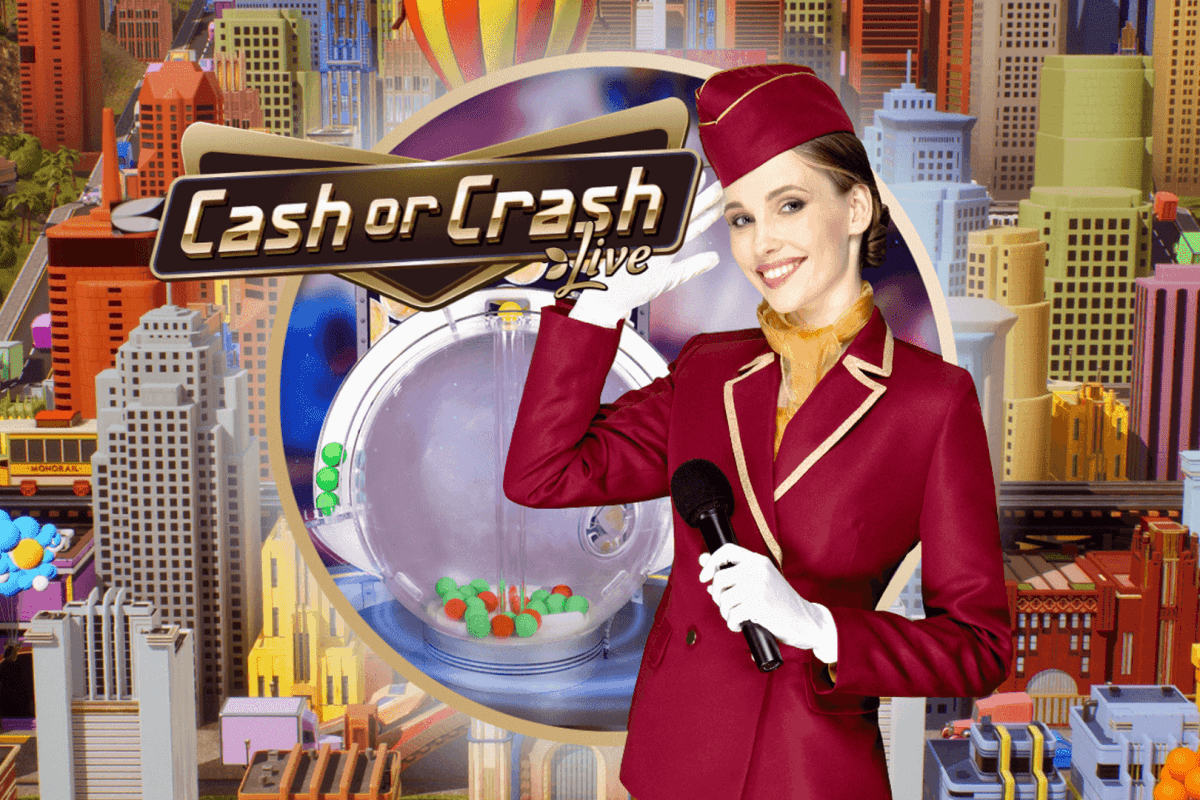
Deconstructing the Game Stages
View the game as a series of different sections, each a new gamble. Surviving a crash doesn’t knock you out. You move to the subsequent stage with your collected winnings secure, then begin the risk cycle from scratch on the next segment of the rocket’s journey. This structure is critical. It creates a drama, with tension that mounts as you advance. The announcer heightens the tension, revealing how many players are still riding the rocket as the multiplier reaches impressive levels. Early stages often see conservative plays. Subsequent phases, with their high-stakes multipliers, tempt you to gamble the winnings you’ve already secured. This structure is the core of the game’s appeal. It forces a series of independent, high-pressure decisions instead of a single one.
From Low to High Risk: The Escalating Risk
Observe the colored trajectory the rocket travels. It’s a core part of the game’s vocabulary. The opening segment is often a “Green Zone,” a lower-risk phase where a crash is still possible. Then, the rocket could reach an “Amber Zone,” a clear warning that risk is rising. The concluding section is the “Red Zone.” Here, multipliers appear their most attractive, but the chance of a crash is statistically at its maximum. Such visual cues are not just decoration. They offer a visual shorthand for the hazard level at any moment. They turn an intangible probability seem concrete. Understanding the game is deliberately warning you about increasing uncertainty is a critical piece of strategic information.
Theoretical Foundations and Variance
Let’s consider the numbers that make the game tick. The multiplier for every round is based on a defined statistical distribution. Frequent, small multipliers for instance 1.2x or 1.5x have a high chance of being selected. Very large multipliers are possible, but are exponentially more rare. This system keeps the game stable. The common, minor crashes fund the occasional, large potential wins. The player payout percentage is a theoretical percentage across millions of games. In a single gaming session, the swings are wild. You’re not wagering against the house in a traditional way. You’re acting against a secret, unpredictable number. Keep these key facts in mind:
- Separate Rounds: Every round’s crash point is an independent occurrence. A crash at 1.2x in stage one tells you nothing about stage two.
- No Forecasting Ability: The RNG eliminates any predictable patterns. Historical crashes or big wins do not influence what comes next.
- Casino Margin: The game’s design includes a built-in house edge, as reflected in the publicly stated RTP from the developer.